Show Up and Speak Up: Your Guide to Making Public Meetings Work for You
Why Your Voice Matters More Than You Think
Last Tuesday evening, I watched a single parent change the course of a $2.3 million park renovation project with three minutes of prepared remarks and a folder full of photos. She wasn’t a lobbyist or political insider. She was Maria Santos, a working mom who noticed that the proposed playground design completely ignored accessibility features for her daughter’s wheelchair. By the end of the meeting, the city council had directed staff to revisit the entire design with universal accessibility as a priority.
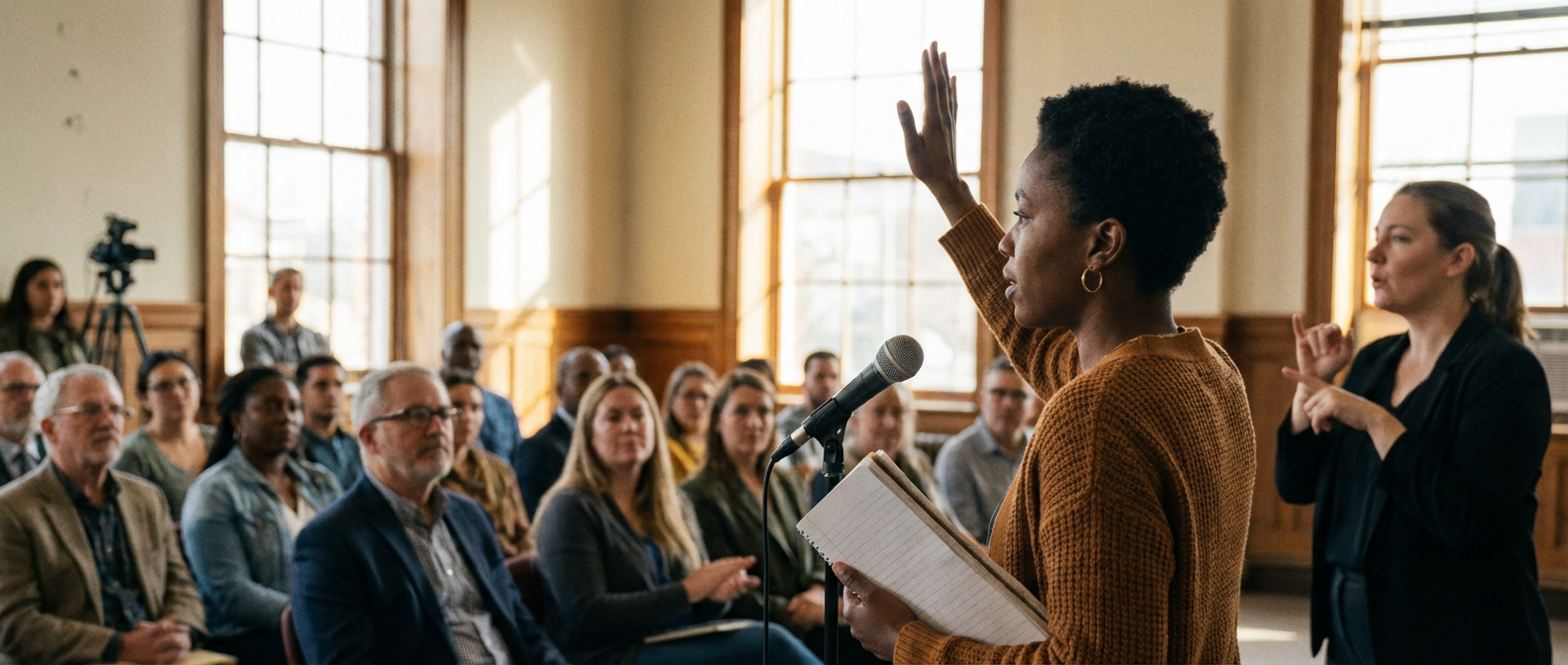
This is what democracy looks like at ground level. While cable news fixates on Washington theatrics, the decisions that directly shape your daily life happen in community centers, school board rooms, and city halls across the country. The pothole outside your house, the crosswalk your kids use to get to school, the noise ordinance that determines whether your neighbor can run power tools at 7 AM on Saturday. These aren’t abstract policy debates. They’re the building blocks of your community, and you have more power to influence them than you might imagine.
Public meetings exist because government officials are required to conduct business in the open, but they only work when citizens show up. The people who attend these meetings regularly often represent narrow interests or have big money at stake. Your presence as an everyday resident adds perspective that’s often missing from these conversations. When you speak up about how a proposed development might affect traffic in your neighborhood or how budget cuts might impact library hours your family depends on, you’re not just expressing an opinion. You’re giving officials information they need to make better decisions.

Do Your Homework Before You Show Up
Effective public meeting participation starts long before you walk through those council chamber doors. The most impactful speakers I’ve observed share one common trait: they’ve done their homework. This doesn’t mean becoming an expert on municipal law, but it does mean understanding the basics of what’s being discussed and how the decision-making process works in your community.
Start by reviewing the meeting agenda, which most local governments post online at least 24 to 48 hours in advance. Don’t just skim the titles. Click through to read the staff reports, budget documents, or planning materials referenced in each item. These background documents often contain the most important details and give you insight into what questions council members might be wrestling with. If you’re planning to speak about a specific agenda item, note its number and estimated time on the schedule so you know when to arrive.
Research the decision makers who will be listening to your comments. Most local government websites include biographical information about elected officials and appointed board members. Understanding their backgrounds, priorities, and past voting patterns helps you frame your message in ways that resonate. If Councilwoman Johnson consistently advocates for small business interests, emphasize how your concern affects local entrepreneurs. If Board Member Chen has championed environmental issues, connect your point to sustainability or climate impact.
Finally, get familiar with your local government’s specific procedures for public comment. Some communities limit speakers to two minutes, others allow three. Some require you to sign up in advance, others take speakers on a first-come, first-served basis. Some allow public comment on any topic, while others restrict comments to items on that day’s agenda. Knowing these rules prevents awkward surprises and helps you use your time effectively.
Craft Your Message for Maximum Impact
The most powerful public comments combine personal experience with broader community impact. Officials hear a lot of abstract arguments and policy theories, but they remember specific stories about real people facing real problems. When you explain how the proposed street closure would force elderly residents to walk an extra six blocks to reach the bus stop, or how inconsistent trash pickup has led to rat problems behind local restaurants, you’re giving decision makers concrete information they can act on.
Structure your comments with a clear beginning, middle, and end. Start by introducing yourself and establishing your connection to the issue. Are you a longtime resident of the affected neighborhood? A parent whose children attend the school facing budget cuts? A business owner dealing with parking challenges? This establishes your credibility and helps officials understand your perspective. Then present your main point clearly, supported by specific examples or data. Finally, end with a clear request for action. Don’t just complain about a problem. Propose a solution or ask for a specific next step.
Practice your remarks out loud before the meeting. Two or three minutes passes more quickly than you expect, especially when you’re nervous. Time yourself speaking at a normal pace and edit ruthlessly to fit within the limit. Write out key points on note cards if that helps, but avoid reading a prepared statement word for word. Eye contact and conversational delivery make your message more engaging and memorable than a formal speech.
Navigate the Meeting Like a Pro
Arrive early to get a sense of the room and the participants. Public meetings often attract regular attendees who know each other and understand the local political dynamics. Watch how speakers approach the podium, how the chairperson manages discussion, and how board members interact with each other and with the public. This informal intelligence helps you adjust your approach and timing.
Pay attention to the overall meeting flow before your turn to speak. Are officials running behind schedule and clearly eager to move through agenda items quickly? Focus on your most important points and skip background context they probably already know. Are they engaging speakers with follow-up questions and detailed discussion? You might have more opportunity to elaborate or respond to concerns they raise.
When your time comes to speak, state your name clearly for the record, thank the officials for their service, and dive into your main points. Keep a respectful tone even if you’re criticizing a policy or decision. These are your neighbors and community leaders, not distant politicians, and treating them with courtesy makes them more likely to seriously consider your input. If officials ask questions or seek clarification, answer directly and honestly. If you don’t know something, say so rather than guessing.
Don’t be discouraged if you don’t get an immediate response or if the officials seem to move on quickly to the next item. Public comment is often informational rather than interactive. Your remarks become part of the official record and may influence how officials vote or what questions they ask staff to research further.
Follow Through and Build Relationships
Your work doesn’t end when you step away from the podium. Effective advocacy requires follow-through and relationship building over time. Send a brief email to relevant officials after the meeting, thanking them for their time and repeating your key points along with any additional information you promised to provide. This creates a paper trail and keeps your concerns visible.
If the officials requested more information or promised to look into your concern, follow up within a reasonable timeframe. Local government staff juggle many competing priorities, and a polite inquiry about the status of your request shows continued engagement without being pushy. Document these interactions so you can reference them in future communications or at subsequent meetings.
Consider attending meetings regularly, even when you don’t have a specific item to address. Consistent presence helps you understand ongoing issues and establishes you as an engaged community member rather than someone who only shows up to complain. You’ll start to recognize other regular attendees and may find opportunities to work together on shared concerns.
Building relationships with local officials and staff outside of formal meeting settings can significantly enhance your effectiveness