
When Great Powers Pivot: The Wagner Gold Rush and the New Scramble for Africa
The Echoes of Empire in Mali’s Mines
If you’ve ever wondered what the end of one empire and the beginning of another looks like in real time, Mali offers a masterclass. The departure of French forces in December 2025, after thirteen years of Operation Barkhane, wasn’t just a military withdrawal. It was the end of a chapter in Sahelian geopolitics that began with colonial occupation over a century ago. What happened next reads like a textbook case of how resource-rich regions become pawns in great power competition, except this time the players wear different uniforms and speak different languages.

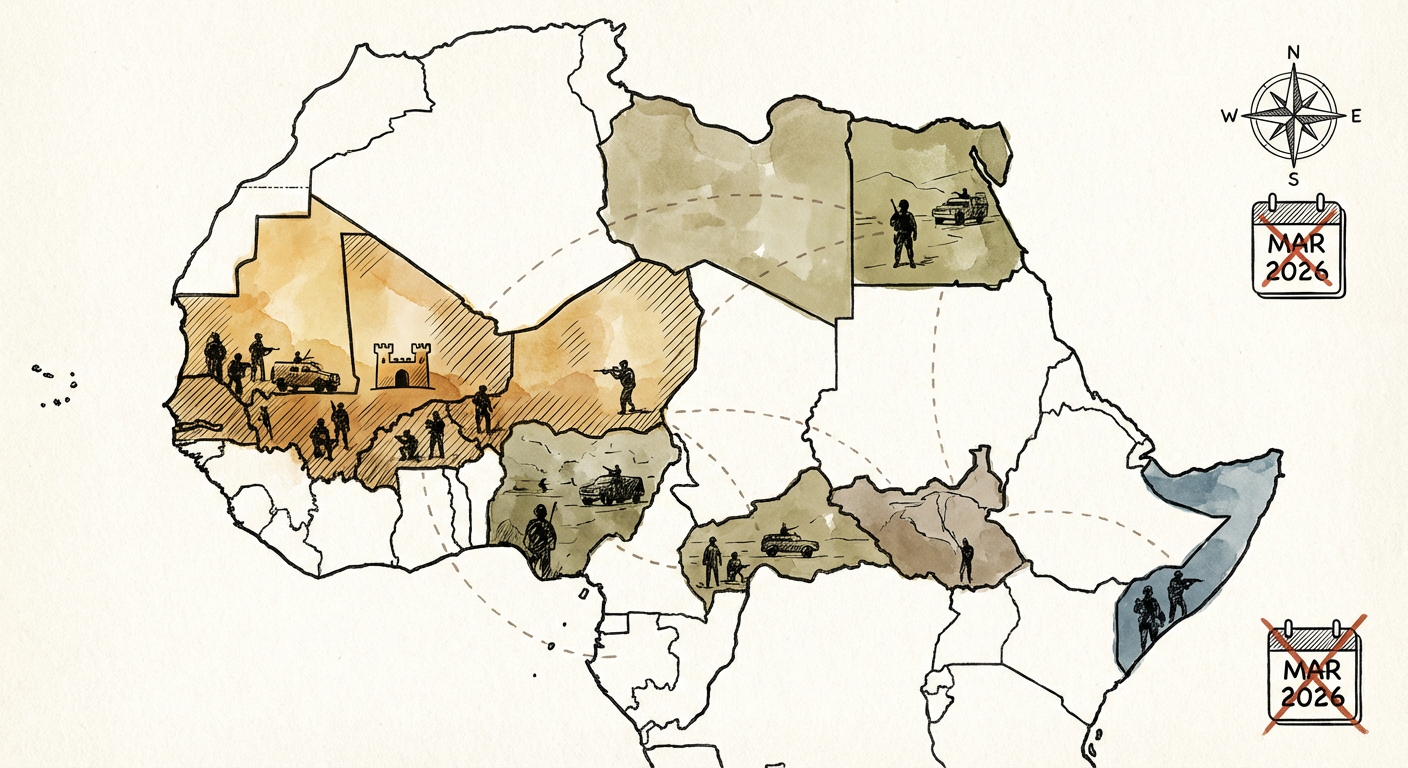
Russian military contractors, operating through Wagner successor groups, now run bases across eight African nations as of March 2026. Mali is their continental headquarters. This isn’t random geography. Mali sits on some of Africa’s richest gold deposits, and the Malian government has handed exclusive mining rights to Russian-backed firms for three major sites worth approximately $2.4 billion, according to the Africa Mining Intelligence Analysis. The pattern here should feel familiar to anyone who’s studied resource extraction by colonial powers. The difference? This time, the infrastructure being built helps Moscow instead of Paris.
The speed of this transition tells us something important about how power vacuums work. When France announced its withdrawal timeline, Russian contractors didn’t wait for the dust to settle. They showed up with checkbooks, security guarantees, and fewer questions about governance standards than their Western predecessors. For Malian leaders facing insurgencies and economic pressures, this wasn’t just an alternative. It was apparently a more practical one.
The Economics of Influence: Gold, Guns, and Governance
The historical parallels here are both illuminating and troubling. The British East India Company’s expansion across the Indian subcontinent followed a similar playbook: provide security to local rulers, secure exclusive trading rights, gradually take over administrative functions, then extract wealth while maintaining the fiction of local sovereignty. Russian contractors in Mali aren’t quite there yet, but the basic elements are strikingly similar.
The three major gold deposits now under Russian control represent more than mineral wealth. They’re leverage points in a regional economy where formal banking systems remain weak and alternative currencies carry real political weight. When a foreign power controls both the extraction and security around your primary export commodity, questions of sovereignty become more than academic. They become daily governance realities that affect everything from local employment to national budget planning.
The Economic Community of West African States understood these implications when it suspended Mali, Burkina Faso, and Niger in January 2026, citing governance concerns and Russian military cooperation. This wasn’t diplomatic theater. ECOWAS recognized that accepting Russian contractors as legitimate security providers would fundamentally alter the regional balance of power, potentially creating a Russian sphere of influence that could challenge existing economic partnerships and democratic institutions across West Africa.
The Human Cost of Geopolitical Chess
The most sobering part of this transition appears in the casualty reports. UN peacekeeping forces documented a forty-five percent increase in civilian casualties in northern Mali following the shift to Russian security partnerships. This statistic deserves careful consideration because it reflects how different powers approach counterinsurgency operations and civilian protection.
French forces, whatever their other limitations, operated under rules of engagement that emphasized civilian protection and worked within UN peacekeeping frameworks. Russian contractors, based on their operational history in Syria and Ukraine, prioritize tactical effectiveness over humanitarian concerns. The UN Security Council Mali Report documents this shift in operational philosophy and its consequences for local populations caught between insurgent groups and their supposed protectors.
This increase in civilian casualties isn’t an unfortunate side effect. It’s a predictable outcome of how Wagner-style operations function. When your primary tool is overwhelming force rather than community engagement and institution building, civilian populations become acceptable losses in pursuit of broader strategic objectives. For Malians living in contested areas, this represents a fundamental change in how security is conceived and delivered.
Lessons from History’s Playbook
The closest historical parallel to Mali’s current situation might be the Congo Free State under Leopold II, where resource extraction and private military force combined to devastating effect. Like Russian contractors today, Leopold’s Force Publique operated with minimal oversight and prioritized economic extraction over local welfare. The difference is that today’s operations occur within existing state structures rather than replacing them entirely.
This distinction matters because it affects how international law applies and how other powers can respond. Russian contractors maintain the fiction of operating at Mali’s invitation, which complicates intervention strategies that worked against more traditional colonial occupations. When sovereignty is technically preserved but practically compromised, the international community lacks clear precedents for effective response.
The broader pattern extends beyond Mali to include similar Russian operations across the Sahel and Central Africa. What we’re witnessing isn’t just opportunistic resource grabbing but a systematic approach to building influence through security partnerships and economic integration. This represents a sophisticated understanding of how modern imperial projects must adapt to contemporary international law while achieving similar strategic objectives.
What This Means for Democracy and Development
Mali’s Wagner pivot offers important lessons about how democratic institutions interact with security challenges and economic pressures. When governments face immediate threats to stability, the temptation to accept help with fewer strings attached becomes overwhelming. Russian contractors offer military effectiveness without the governance requirements that typically accompany Western assistance programs.
This creates a dangerous precedent for democratic development across the region. If Russian-backed governments in Mali, Burkina Faso, and Niger demonstrate that authoritarian partnerships can deliver stability and economic growth, other struggling democracies may find this model attractive. The suspension by ECOWAS is an attempt to contain this influence, but the organization’s effectiveness depends on its ability to offer viable alternatives to Russian partnerships.
The challenge for democratic powers isn’t just countering Russian influence but addressing the underlying conditions that make such partnerships appealing. When democratic institutions fail to provide security or economic opportunity, populations will support alternatives that promise both, regardless of their broader implications for human rights or regional stability.
Understanding how Mali’s gold mines are reshaping Sahel geopolitics requires recognizing that this story is still being written. The outcomes will depend partly on how effectively democratic institutions can adapt to compete with authoritarian alternatives, and partly on whether local populations maintain agency in determining their own political futures. What’s your take on how democratic powers should respond to these challenges? The comments are open, and I’d love to hear your thoughts on this unfolding situation.