Sudan’s Forgotten War Enters Year Three: Why the World’s Largest Displacement Crisis Barely Makes the News
The Scale We’re Not Talking About
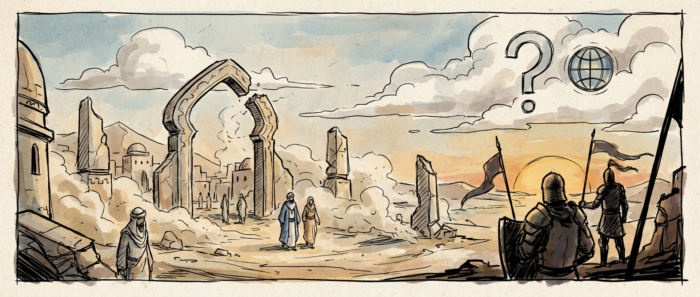
Here’s a number that should stop you cold: eleven million people. That’s more than the population of Ohio, all displaced from their homes within a single country over three years. Yet when you open your news feed on any given morning, the Sudan conflict barely registers. We hear about wars in Europe, conflicts in the Middle East, tensions across the Pacific. But Sudan’s humanitarian catastrophe, now entering its third year, has become the world’s largest internal displacement crisis, surpassing even Ukraine in raw numbers, and it’s happening with a level of international indifference that demands explanation.
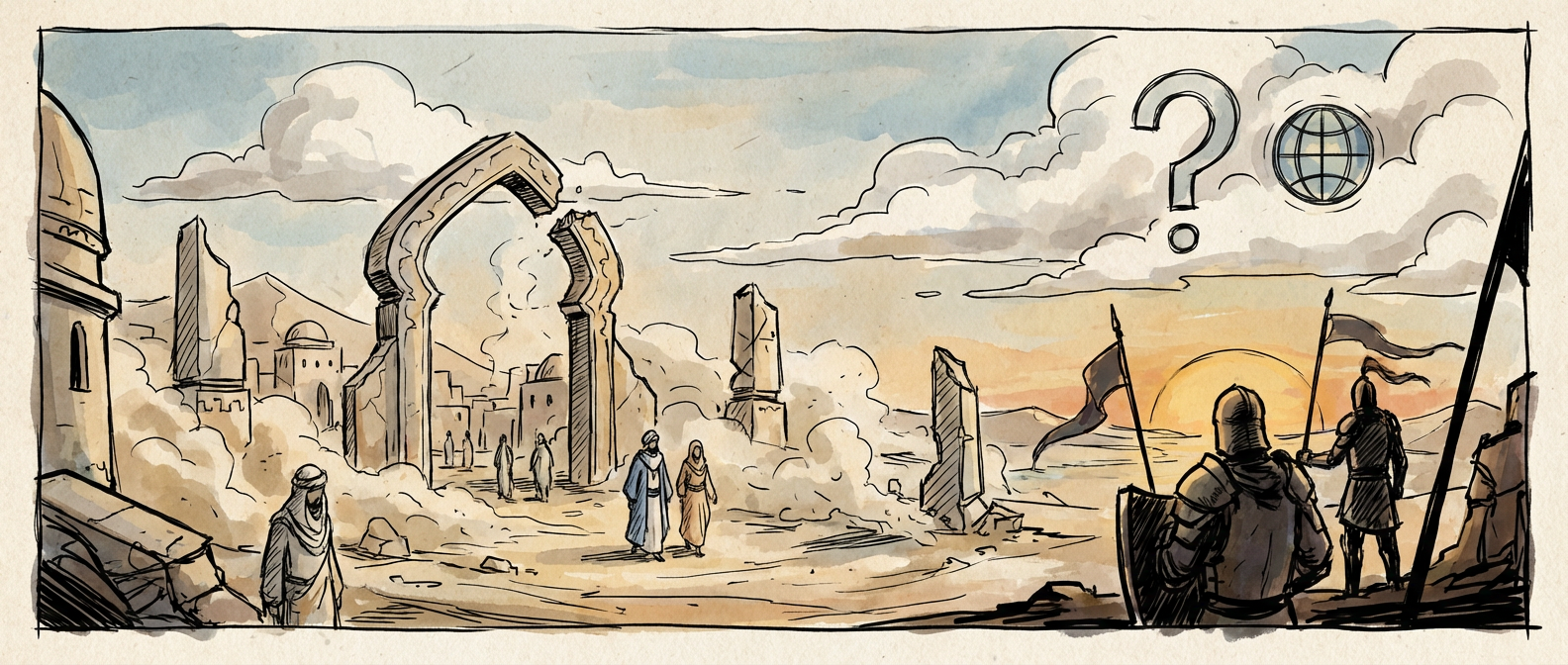
The Rapid Support Forces and the Sudanese Armed Forces have been locked in a brutal struggle for territory and power since April 2023. The conflict isn’t about ideology in the traditional sense, and it’s not a straightforward civil war with clear geographic divides. It’s a state collapse masquerading as a military conflict, and the consequences are unfolding in real time. When you strip away the military terminology, what you’re seeing is the systematic breakdown of a nation-state, with ordinary people caught between competing armed groups, vanishing food supplies, and a world that has largely moved on to other concerns.
The Famine Condition Nobody’s Calling a Famine
Let’s talk about food, because that’s where the abstraction becomes concrete. Approximately 8.1 million Sudanese people are facing emergency or catastrophic famine conditions according to the most recent assessment from the World Food Programme. Read that again. Emergency or catastrophic. That’s not a projection or a worst-case scenario. That’s the current reality as of late 2025. The WFP uses a five-tier classification system for hunger severity, and Phases 4 and 5 represent the point at which people are literally starving. Not metaphorically. Not in the abstract sense we sometimes use the word. Actually starving.
The mechanics of this famine are worth understanding because they reveal something important about how humanitarian crises develop. This isn’t a drought situation where nature dealt a bad hand. This is a man-made catastrophe. Armed groups control supply lines. Hospitals have been destroyed or repurposed for military use. Displacement camps lack basic sanitation and medical care. Violence makes it impossible for aid organizations to reach people who need help. The World Food Programme has had to reduce rations multiple times because funding can’t keep pace with need, and security conditions make food distribution increasingly dangerous. You can find detailed reporting on their work at World Food Programme Sudan Emergency Situation Report, which gives you the operational perspective from people actually trying to keep people alive on the ground.
Following the Money and Weapons: Why This War Keeps Going
If you’ve ever wondered how conflicts sustain themselves when populations are starving and infrastructure is collapsing, Sudan offers an instructive case study. The Rapid Support Forces, one of the two main combatants, have received documented weapons and logistical support from the United Arab Emirates according to a UN Panel of Experts report released in late 2025. International weapons shipments and military backing aren’t unusual in global conflicts. What makes Sudan different is how this external support combines with the complete absence of serious diplomatic pressure from the world’s most powerful institutions.
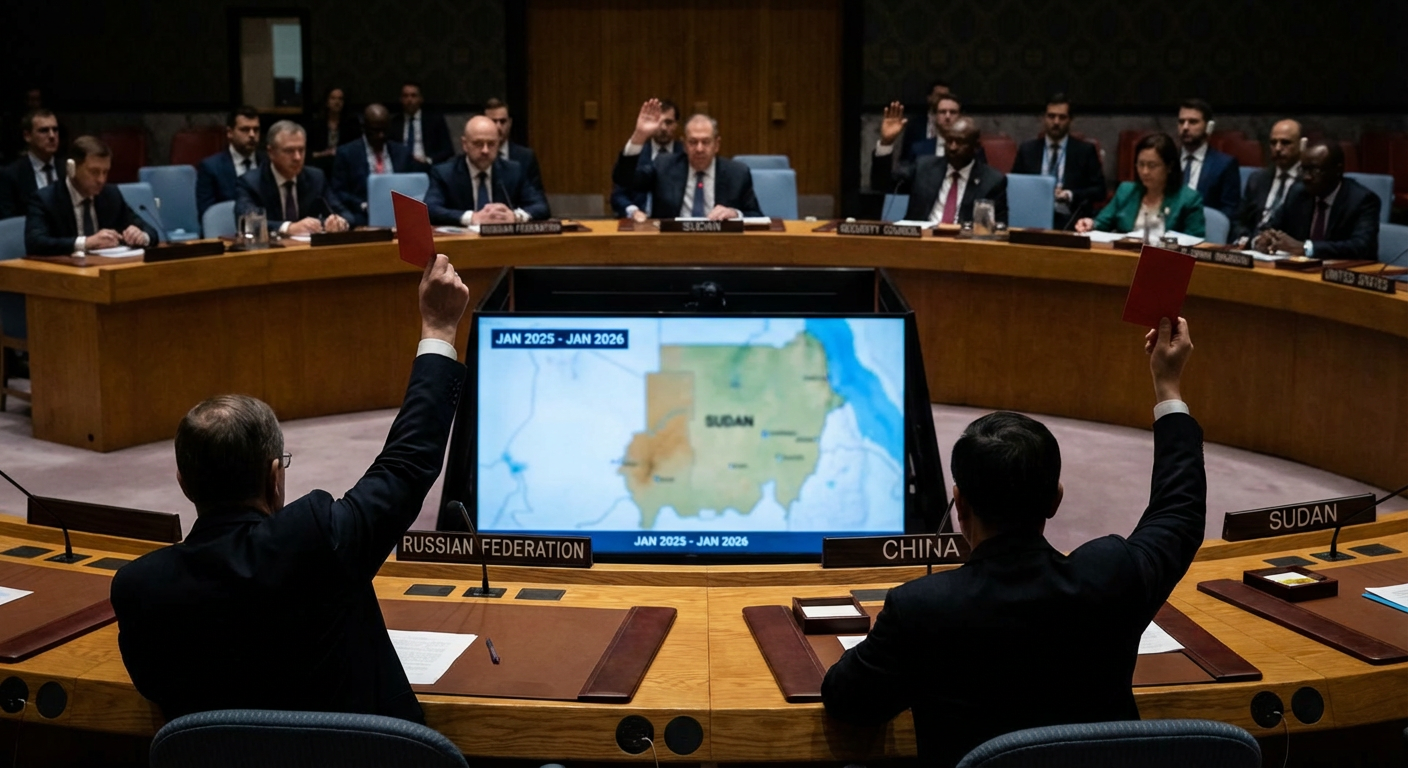
This brings us to the Security Council, where Sudan’s fate gets negotiated among the five permanent members. Russia has used its veto power three times between early 2025 and early 2026 to block resolutions aimed at addressing the Sudan crisis. In two of those instances, China joined Russia in vetoing. Think about what that means in practical terms. The international body specifically designed to authorize humanitarian intervention and peacekeeping operations has been rendered ineffective on this particular crisis. That’s not a failure of the system working as intended. That’s the system working exactly as designed, but in a way that prioritizes geopolitical competition over humanitarian response. The great power dynamics that characterized the Cold War never actually ended; they just found new theaters.
Justice Without Peace: The ICC and the Accountability Dilemma
The International Criminal Court issued two new arrest warrants for RSF commanders in November 2025, bringing the total number of active arrest warrants related to Sudan to seven. These warrants target individuals suspected of mass atrocity crimes, many with roots in the earlier Darfur conflict. Accountability and justice matter. They absolutely do. But here’s where it gets complicated, and this is where history offers us some useful perspective.
When you look back at conflicts that lasted for decades—Lebanon’s civil war, Somalia’s state collapse, the fragmentation of Yugoslavia—you notice a pattern. International justice mechanisms, while necessary and morally important, exist somewhat separately from the political negotiations that actually end wars. The ICC indictments create powerful leverage for diplomacy, but they can also complicate it. Warlords who know they face arrest warrants have less incentive to negotiate a settlement. They’re fighting for survival in a different way now. This isn’t an argument against accountability or against the ICC’s work. It’s an observation that justice and peace aren’t automatic partners. Managing that tension requires deliberate diplomatic strategy, which Sudan’s conflict currently lacks because the major powers aren’t coordinating any serious diplomatic effort.
What We’re Missing When We Don’t Pay Attention
Here’s what concerns me most about Sudan’s absence from mainstream news cycles: we’re losing the opportunity to learn something important about how state collapse happens and how it might be prevented elsewhere. Sudan is a case study in how regional power competition, weapons flows, weak international institutions, and humanitarian disaster create a feedback loop that becomes progressively harder to interrupt.
If you want to understand geopolitics in 2026, Sudan is essential reading. The UN OCHA Sudan Humanitarian Response Plan 2026 gives you the operational landscape from the organizations actually doing the work. The reports from the Panel of Experts reveal how external actors fuel internal conflicts. The ICC warrants show how accountability mechanisms navigate state collapse. These aren’t abstract policy debates. They’re live questions being answered in real time by the decisions that international actors make or don’t make.
The forgetting of Sudan, its absence from conversation, from headlines, from the collective focus of global opinion, is itself a political fact worth examining. What would it take for this conflict to register the way others do? What does our media ecosystem reveal about which crises we consider important? These are questions that go beyond Sudan itself. They’re questions about how we understand the world and what we’re equipped to see. If you’ve been following Sudan at all, or if this is your first real exposure to the scale of the crisis, I’d encourage you to dig deeper. Read the assessments. Follow the reporting from organizations on the ground. Then think about what questions you’d ask if you were designing a response. That exercise alone teaches you something valuable about how geopolitics actually works.