
Project 2025 in Practice: Tracking Which Policy Proposals Actually Became Law 12 Months In
The Document That Changed Everything
When the Heritage Foundation released its “Mandate for Leadership” ahead of the 2024 election, political observers faced a document of almost overwhelming scope. Nearly 920 pages long, it outlined a restructuring vision that touched 436 federal programs and agencies. This wasn’t a campaign platform in the traditional sense. It was a detailed operational blueprint, written by conservative policy experts, sitting on shelves before anyone knew whether it would ever matter. Then the election happened, and suddenly, this massive policy architecture wasn’t abstract anymore. It became a potential roadmap for an actual administration.

What we’re examining here is the gap between ambition and implementation. That gap matters because it teaches us something real about how power actually works in government. Big ideas need champions. They need money. They need legal pathways. They need, often, the cooperation of people who don’t want to cooperate. Twelve months into implementation, that gap tells a revealing story about what happens when ideology meets institutional reality.
The Early Victories: What Actually Moved Fast
By early 2026, tracking by major outlets showed that the Trump administration had implemented or initiated implementation of somewhere between 60 and 65 percent of Project 2025’s first-year recommendations. That’s a genuinely significant batting average in the world of large-scale policy change. But that statistic deserves unpacking, because “initiated implementation” and “actually implemented” aren’t quite the same thing, and understanding the difference is where this story gets interesting.
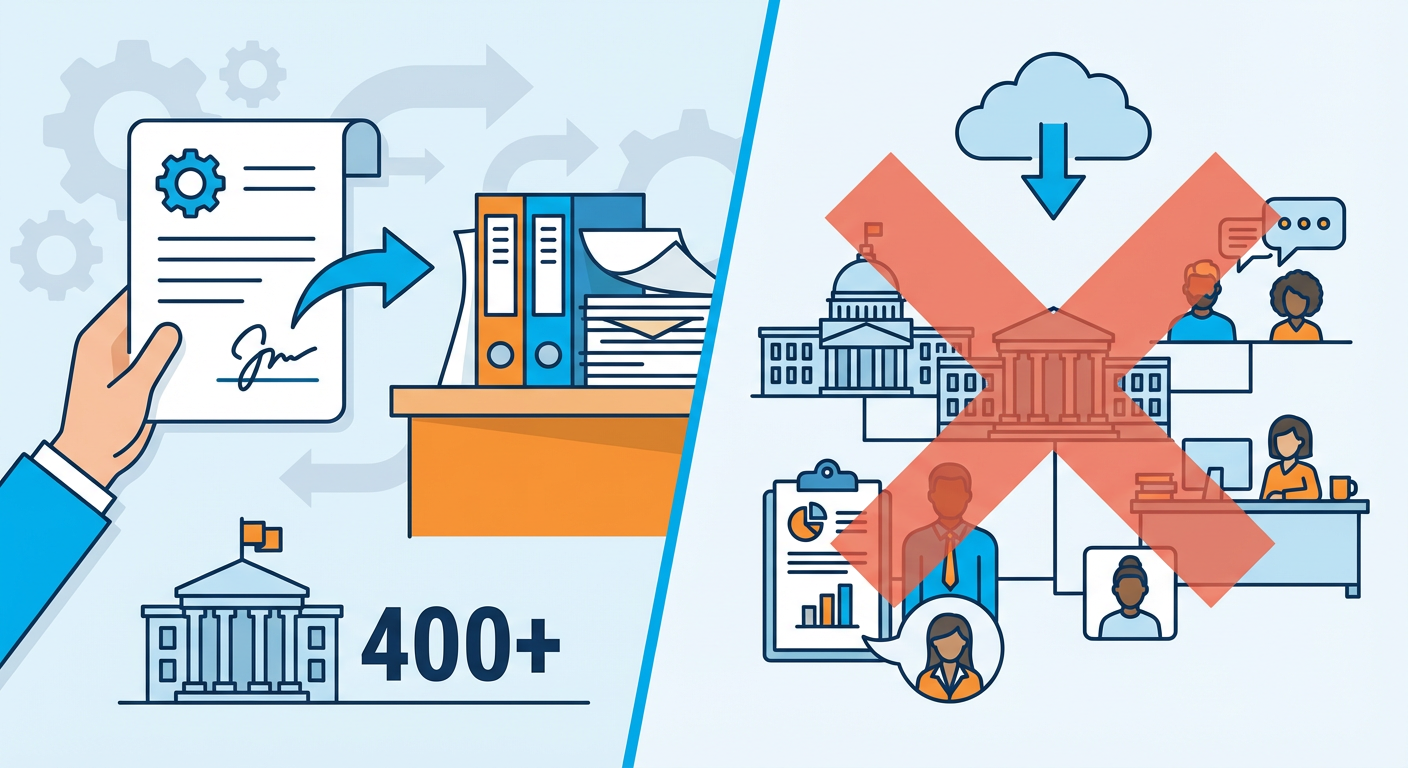
The fastest wins came in areas where the executive branch had direct authority to act without Congress. Within the first 100 days, the administration signed a series of executive orders that directly mirrored Project 2025’s language on diversity, equity, and inclusion initiatives. These orders affected over 400 federal offices across the government. Things moved quickly because the machinery already existed. The President could direct agency heads to stop funding certain programs, alter hiring practices, and revise internal policies. This wasn’t legislation that needed to thread through Congress. This was the executive branch using power it arguably already possessed.
The real question that emerges here is straightforward: Did the speed of these changes reflect the strength of the mandate, or did it reflect the nature of executive power itself? Those are two very different things, and conflating them leads to misreading what’s actually happened.
Where the System Put on the Brakes
Now we arrive at the instructive part. Project 2025 included, as a centerpiece recommendation, the dismantling of the Department of Education. This wasn’t a peripheral goal. It represented a core ideological priority for Heritage Foundation conservatives. Twelve months in, that department still exists. Why? Because the Constitution requires an act of Congress to abolish a department. The President can’t simply decide a federal agency is finished. That’s not how the system works, and watching this particular proposal collide with reality tells you something important about the staying power of institutional structures.
The legislative obstacles didn’t stop the administration from trying. But trying and succeeding are not the same thing. This is where the argument becomes clear: Project 2025 was written partly by people who understood these constraints deeply, and partly by people whose ideological convictions outpaced their institutional knowledge. The result is a document that achieved remarkable penetration in areas of direct executive authority while encountering genuine resistance in areas requiring legislative cooperation.
Other significant recommendations faced similar friction. Restructuring Social Security, modifying Medicare, and implementing large-scale reductions to federal workforce structure all require Congressional action. Some have moved forward through legislative pathways. Others have stalled. The pattern here isn’t mysterious. Power in American government is distributed by design, and that distribution sometimes frustrates people who want to move quickly.
Public Awareness and Political Legitimacy
Something else changed in that first year worth paying attention to: public awareness of Project 2025 itself skyrocketed. Pew Research Center Political Survey Data showed that by late 2025, 61 percent of Americans had heard of Project 2025. That’s a remarkable shift from mid-2024, when only 25 percent of Americans could identify it. In less than two years, what was an inside document became a known quantity in the broader public conversation.
This matters for understanding implementation. When policies operate in obscurity, they face one kind of political resistance. When they operate in full public view, something changes. Congressional offices receive constituent calls. Advocacy groups mobilize. Local officials start thinking about how federal policy changes affect their communities. The document itself became a political actor once the public knew about it. That’s not typically how policy implementation works, and it created conditions unlike those faced by most administrative agendas.
The Honest Assessment
So here’s where we land after twelve months: Project 2025 achieved substantial implementation in areas where executive authority was plausible and legal challenges remained manageable. It achieved moderate implementation in areas where Congressional cooperation was possible or where bipartisan support existed for particular changes. It achieved minimal implementation in areas where Constitutional requirements, legislative opposition, or public mobilization created real barriers.
Project 2025 was neither the all-consuming administrative takeover that critics warned about nor the complete blueprint that supporters hoped for. It was what policy documents actually become when they meet the reality of American institutional life. Washington Post Project 2025 Policy Tracker and other tracking efforts provide detailed data on specific policies, and if you’re seriously interested in understanding what actually happened, that granular approach is where the real learning happens.
What I keep returning to is this: the American system is designed to make sweeping change difficult. That’s intentional. Whether you see that as a feature or a bug depends entirely on whether you liked the changes being proposed. But what matters most is understanding how your government actually works, where power concentrates, where it disperses, and how to participate in these processes meaningfully. That understanding doesn’t come from headlines. It comes from tracking, reading, and thinking through what implementation actually looks like. Pick one policy area from Project 2025 that genuinely interests you and follow it forward from here. That’s how civic understanding actually builds.