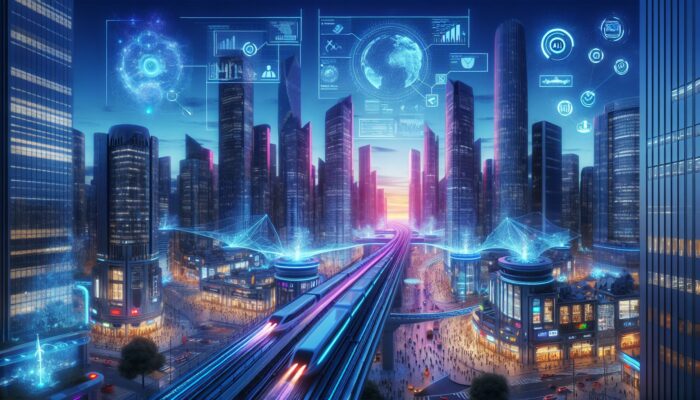
Breaking the Sound Barrier of Tomorrow’s City: AI in Urban Planning
Hey there, fellow tech enthusiasts! Strap in, because today we’re going on a journey through cityscapes of the future, all orchestrated by artificial intelligence! Urban planning is rarely considered the sexiest of subjects, but I can promise you, by the end of this post you’ll start seeing cities like sci-fi metropolises come to life.
Urban jungles can feel completely overwhelming. The noise, endless lines at bus stops, crowds of people in suits dodging honking cars during rush hour. But what if I told you that AI is quietly working on solutions for cleaner, gridlock-free cities with better efficiency? Let’s look at how AI isn’t just watching from the sidelines but actually orchestrating changes to bring some order to the cities we call home!
AI as the Brain Behind City Skylines
Before we go deeper, let’s talk about why city planners increasingly see AI as the answer to their urban problems. Spoiler alert: it’s all about massive amounts of data and some seriously impressive processing power!
Modern urban planners depend heavily on data collection. We’re talking about everything from current traffic patterns to what residents actually want, utilities, income demographics, even how many people push strollers through parks each day. It’s complicated stuff! Yet AI systems can sift through all this chaos, using complex algorithms that consider way more variables than any human could reasonably handle.
Traffic Management Gets Smarter
Think about Mumbai’s chaotic streets or any major city during rush hour. It’s like watching organized chaos at breakneck speed. But through machine learning and real-time data processing, traffic AI systems are getting pretty smart about managing flow patterns. We now have programs that can analyze traffic data in real-time and adjust signals automatically to keep things moving.
Can smart traffic lights actually solve our commuting nightmares? The early results look promising, though we’re still working out the kinks in these systems.
Building Better Communities
AI helps planners figure out where to put parks, schools, and housing developments by analyzing population data, transportation patterns, and community needs. It’s not perfect, but it beats the old method of making educated guesses based on limited information.
The technology can predict which areas will need more infrastructure as cities grow, helping planners stay ahead of problems instead of constantly playing catch-up. That’s a pretty big deal when you consider how expensive it is to retrofit cities after they’re already built.