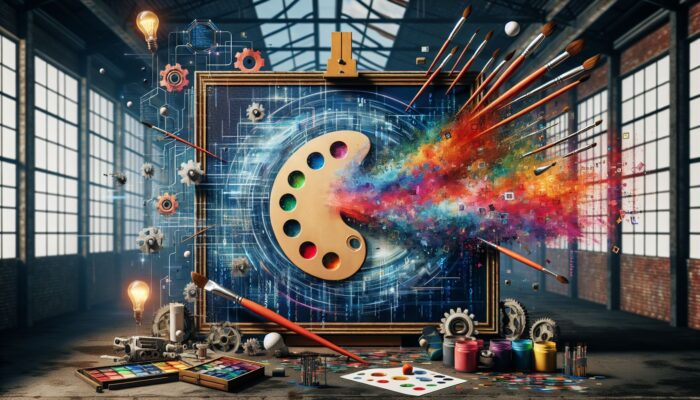
Gearing Up for a Creative AI Revolution: When Art Isn’t Redefined, But Reinvented
Well folks, it’s happening. We’re knee-deep in an era where Artificial Intelligence isn’t just dabbling in creativity–it’s leading the charge. Whether you’re diligently coding in a caffeine-lined bunker or just sipping on a morning brew, there’s an undeniable excitement buzzing around AI’s jest at fine arts, music, and all things creative. Let’s take a dive, shall we?
AI Steps Into the Gallery: Art’s New Player
Remember when art was strictly a human thing? Those days feel ancient now. AI-generated creativity covers gallery walls, fills digital spaces, and even pops up in sculpture gardens. Last Tuesday, I wandered into a downtown pop-up gallery with low expectations. What I found? Art pieces that were dramatically different—think Picasso meets Rothko meets a highly caffeinated data scientist. The brushstrokes (or lack thereof) were unlike anything human hands typically create. Subtle gradients blended with algorithmic precision in ways that honestly made me pause and think.
I’m not the only one paying attention. Museums worldwide are hosting AI art exhibitions. The Victoria and Albert Museum in the UK recently showcased AI-generated works that challenged everything I thought I knew about visual art. It’s happening, and people are showing up to see it.
Music Gets a Digital Remix
During lockdown, I found myself on the floor with headphones, listening to AI-generated music that felt oddly hypnotic. Companies like Jukedeck (before ByteDance acquired them) were already creating songs that could pass for human-made tracks. The melodies worked. The rhythms made sense. Sometimes I couldn’t tell the difference.
Now we have AI systems composing everything from background music to experimental pieces that push boundaries in ways human composers might never think to try. It’s not replacing human musicians, but it’s definitely creating new possibilities for what music can be.
Writing Meets Machine Learning
Here’s where things get personal for writers like me. GPT-3 and its successors can write poetry, craft stories, and even generate entire articles. I’ve tested these tools myself, and honestly? Sometimes the output is impressive. Other times it’s complete nonsense dressed up in fancy language.
The technology isn’t perfect, but it’s getting better fast. Publishers are definitely paying attention. Some are experimenting with AI-assisted writing, while others worry about what this means for human writers. I get both perspectives.
What This Actually Means
So where does this leave human creativity? I think we’re looking at collaboration rather than replacement. AI can generate ideas, create starting points, and help overcome creative blocks. But it still needs human judgment, emotion, and that indefinable spark that makes art meaningful.
The technology raises real questions though. Who owns AI-generated art? How do we credit creativity when algorithms are involved? These aren’t just philosophical puzzles—they’re practical problems the creative industry is wrestling with right now.
Looking Forward
The creative AI revolution is already here. It’s not coming—it’s happening in galleries, studios, and creative spaces around the world. As someone who writes for a living, I find it both fascinating and slightly unsettling. But that’s probably how artists felt when photography was invented, or when digital art first emerged.
Change is constant in creative fields. The artists and writers who figure out how to work with these new tools, rather than against them, will probably be the ones shaping what comes next.