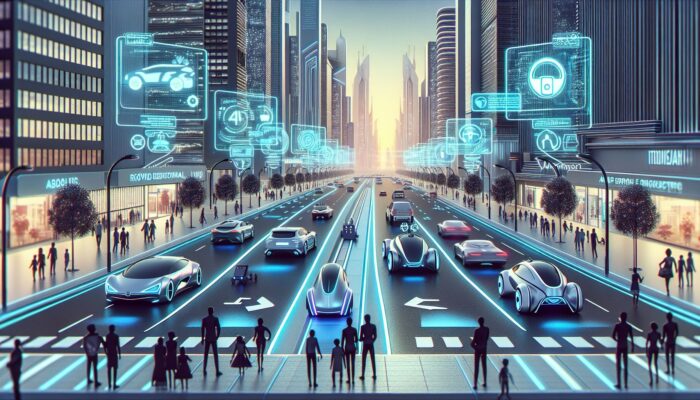
AI Takes the Wheel: How Autonomous Vehicles Are Revolutionizing Our Roads
Hey tech enthusiasts! Today, let’s chat about a topic that’s been steering its way into our lives with increasing velocity—Autonomous Vehicles (AVs). I’ve always found the notion of cars driving themselves fascinating. Imagine cruising down the coast, gazing out at endless ocean views, zero hands on the wheel. It’s almost as if science fiction movies from my childhood are coming to life right before our eyes! So buckle up, because we’re diving into how artificial intelligence is transforming transport as we know it.
From Toy Cars to Real-World Roadsters
Remember those toy cars we used to race across the living room floor as kids? Who knew we’d one day be racing against time to make them a reality on our highways?! The creation of human-less vehicles has been a passion project for techies and often associated, for better or worse, with giants in the industry like Tesla, Waymo, and even traditional car manufacturers like Ford jumping into the fray. But it’s the full integration of AI that really lifted this dream off the drawing board and into driveways.
AI systems inside cars are acting as super-smart copilots, blending machine learning and sensory technology to scan surroundings better than any human driver ever could. While living with the Bandit’s imaginary Johnny-5 of a car might freak out some people (We’ve all seen The Terminator, right?), the reality of in-sync computers seems toe-tappin’ top-of-charts cool.
Smarter and Safer Streets Ahead
The obvious bit that’s on the top of everyone’s list? Safety. Now, I love my coffee as much as the next Silicon Valley insider, but let’s be real—where there’s human error, there’s spilled macchiatos and fender benders. As AV technology continues to grow, experts are optimistically projecting a 90% reduction in accidents. A win for roads, insurance rates, and, most importantly, lives. Having sensors covering every nook and cranny plus a computer that never takes a sick day promises better road safety as AV technology grows, sure, but its impact goes even deeper than lower accident numbers.
Cost, Service, and Environmental Benefits
Beyond boosting safety, remember those cheaper taxi costs researchers are projecting? Yeah, mobility wouldn’t hit our pockets as hard. That’d be a pretty nice consolation prize!
Looking at our eco-conscious goals, autonomous taxis and rideshares powered by renewable energy present real potential for reducing emissions. Zero gas-guzzling vehicles polluting the ecosystem and solar-powered cars cutting air pollution? Sign me up!
And here’s an interesting nugget for the financially minded: operational costs for major fleets could drop by 30%. Yeah, I said 30%. Even the most conservative investor would take notice of those numbers.
Roadblocks and Real Challenges
But let’s pump the brakes on all this automotive optimism. We’re not ready to celebrate just yet. The transition to widespread adoption comes with some serious speed bumps that we can’t ignore.
First up: the regulatory maze. Government agencies are scrambling to create rules for something that barely existed five years ago. Then there are the moral dilemmas. What happens when an autonomous car has to choose between hitting a jaywalker or swerving into a family of four? These aren’t just philosophical thought experiments anymore, they’re real programming decisions that engineers have to code into these systems.
The technology still has gaps too. Heavy rain, snow, or even construction zones can throw off sensors in ways that would never faze a human driver. I’ve read reports of test vehicles getting confused by plastic bags blowing across the road or failing to recognize temporary stop signs. These might sound like minor hiccups, but they’re the kind of problems that need solving before your grandmother feels comfortable letting a robot drive her to the grocery store.
Different Approaches to Autonomy
Not all self-driving cars are created equal. The industry has settled on five levels of automation, from basic driver assistance all the way up to full autonomy. Most cars today max out at Level 2, which includes features like adaptive cruise control and lane-keeping assistance. Level 5 is the holy grail, complete autonomy with no steering wheel needed.
Tesla takes the “move fast and break things” approach, pushing out updates to customers’ cars and learning from real-world data. Waymo prefers the cautious route, testing extensively in controlled environments before expanding to new cities. Traditional automakers like GM and Ford are somewhere in between, trying not to get left behind while avoiding the regulatory headaches that come with being too aggressive.
Beyond Personal Cars
The most immediate impact might not be in our driveways but in commercial applications. Self-driving trucks could revolutionize freight shipping, especially for long-haul routes where driver fatigue is a real safety concern. Delivery robots are already rolling around some neighborhoods, and autonomous buses are being tested in several cities.
What’s Really Coming Next
Look, I’ll be honest with you. Full autonomy is still years away, despite what the marketing departments want us to believe. The technology is impressive, but we’re dealing with edge cases and regulatory hurdles that don’t have easy solutions.
That said, the progress is real. Every year, these systems get smarter and more reliable. The question isn’t if autonomous vehicles will transform transportation, it’s when and how quickly we can work through the remaining challenges. Some cities might see fleets of self-driving taxis within the next five years, while rural areas might wait a decade or more.
What I find most exciting is how this technology is forcing us to rethink transportation entirely. Maybe we won’t all own cars in the future. Maybe our cities will be quieter, cleaner, and safer. Or maybe we’ll discover new problems we haven’t even thought of yet. Either way, it’s going to be one hell of a ride.