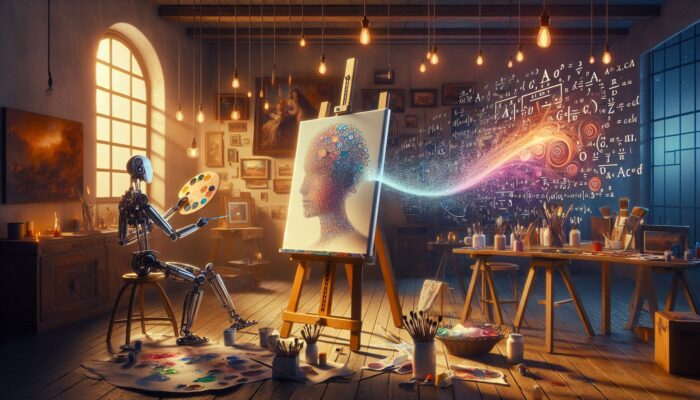
Exploring the AI-Powered Creative Renaissance: Art Meets Algorithm
Hello tech wanderers and innovators,
Let me tell you about something that’s been blowing my mind lately: artificial intelligence is completely changing how we think about creative arts. We’re watching silicon brains learn to paint, compose music, and write in ways that would have seemed impossible just a few years ago. It’s wild stuff.
From Brushes to Binary
I’ve always been fascinated by painting. Had these grand dreams of creating beautiful art, but let’s just say my hands and my college art instructors had very different ideas about my talent level. Like a lot of wannabe artists, I had to face reality: maybe the physical canvas wasn’t my calling.
That’s where AI stepped in and changed everything. Now, somewhere in the algorithms of OpenAI and stable diffusion models, incredible visual works are being born every day. Art that once required years of training and the smell of oil paint can now be created by artificial neurons. It’s honestly kind of surreal.
Lights, Colors, Sensations
Generative Adversarial Networks have become the new rock stars of digital creativity. These models basically pit two AI systems against each other until one creates something that looks real enough to fool the other. It’s like watching a high-tech art battle.
I’ve seen AI create landscapes that blend Georgia O’Keeffe’s bold colors with Bob Ross’s gentle style. The results are trippy and beautiful. This art moves and shifts, almost like it’s breathing. It gets my heart racing every time I see it.
Sound, Harmony, and Digital Symphonies
While AI artists are busy creating visual masterpieces, audio algorithms are composing their own symphonies. Deep in the servers of Spotify and SoundCloud, AI systems are learning to paint with sound instead of pixels. They’re organizing random notes into melodies, creating rhythms that feel almost human.
I’ve heard AI compositions that sound like Debussy got into a collaboration with a computer. It’s strange, sometimes haunting, but undeniably creative. These systems are learning patterns from thousands of songs and spitting out something entirely new.
Origins Reimagined
What really gets me is how these AI systems learn. They absorb everything from classical to electronic, jazz to rock, and somehow find connections we might have missed. It’s like having a musician who’s listened to every song ever recorded and can blend them in ways that surprise even their creators.
But honestly, I’m getting carried away here. What does this all mean for those of us watching from the sidelines?
The Challenges and What Comes Next
Here’s where things get complicated. AI creativity is impressive, but it raises some tough questions.
- The Double-Edged Sword: Sure, AI can help people like me create art we never could have made otherwise. But what happens to artists who’ve spent years perfecting their craft? There’s real tension here between accessibility and authenticity that we’re still figuring out.
Plus, there’s the whole question of originality. When an AI creates something “new,” is it really creating, or just really good at remixing what already exists? I don’t think anyone has a clear answer yet.
Tomorrow’s Creative Landscape
Look, I don’t have a crystal ball, but I think we’re heading toward a world where human creativity and AI capabilities blend together. Artists will use AI as another tool in their toolkit, like how photographers embraced digital cameras or musicians adopted synthesizers.
The artists who thrive will be the ones who figure out how to collaborate with these systems rather than compete against them. It’s not about human versus machine anymore. It’s about what we can create together.