Following the Money: Why Ukraine’s Ceasefire Negotiations Reveal the True Cost of Geopolitical Bargaining
The Riyadh Framework and Its Arithmetic of Sacrifice
In February 2026, U.S. Secretary of State Marco Rubio unveiled a ceasefire proposal in Riyadh that would essentially freeze the conflict along the current military lines. The framework sounds neutral, almost administratively tidy. What it actually means is this: Ukraine would formally cede roughly one-fifth of its sovereign territory to Russian-administered zones. That’s an area larger than the entire state of Connecticut. Strip away the diplomatic language and look at the actual map, and you’re watching a negotiation where one party is being asked to surrender land in exchange for a promise to stop fighting.
Here’s what matters for understanding why this proposal matters beyond just the human cost: territorial concessions have immediate economic consequences. The ceded regions include industrial capacity, agricultural output, and natural resources. They also include populations whose economic productivity would be diverted toward rebuilding infrastructure in war zones rather than contributing to national GDP growth. For a country already facing reconstruction costs estimated in the hundreds of billions, this framework essentially asks Ukraine to negotiate from a position of permanent economic reduction.
The proposal emerged at a specific moment in the aid calculations. When you examine when Rubio presented this framework, you notice it coincided with a measurable shift in Western commitment levels. The numbers tell a story about incentives that matters more than the rhetoric suggests.
The Aid Cliff and the Logic of Abandonment
Let’s talk about something most casual observers miss entirely. Between the first quarter of 2025 and the end of 2025, according to the Kiel Institute Ukraine Support Tracker, combined Western military aid commitments dropped by 43 percent. That’s not a gradual decline. That’s a cliff. A drop of that magnitude in that timeframe points to deliberate policy choices, not random variation.
Understanding this requires following the decision-making chain. Defense budgets operate on budget cycles. Political capitals have election schedules. The calculation at every level became increasingly clear: How much longer can we justify continued military support? How many more quarters of weapons shipments before constituents start asking harder questions about domestic priorities? These aren’t cynical questions. They’re legitimate ones that elected representatives have to answer to their voters.
This is where the Riyadh framework stops being just a diplomatic proposal and becomes a response to a real constraint. When aid commitments are declining, the pressure to find a political off-ramp increases. A ceasefire along current lines becomes more attractive to negotiators precisely because it stops the hemorrhaging of resources without requiring anyone to acknowledge the underlying shift in will.
The uncomfortable truth is this: Rubio’s proposal reflected not some brilliant diplomatic move, but a calculation about what could be sold domestically. The framework essentially codified the limits of Western appetite for continued engagement.
Ukrainian Resistance and Democratic Accountability
Now consider what happened when this framework was presented to the people it would actually affect. President Volodymyr Zelensky firmly rejected territorial concessions unless they came paired with security guarantees equivalent to NATO Article 5 protections. This wasn’t grandstanding. This was a president articulating a position he knew his electorate supported.
Look at what the Kyiv International Institute of Sociology public opinion data showed in January 2026. Sixty-eight percent of Ukrainians opposed any territorial concessions as part of a peace deal. That’s not a narrow majority. That’s a supermajority that’s remarkably stable across demographic groups, the kind of number that signals something beyond ordinary political preference, closer to national consensus about what Ukraine’s future should look like.
Here’s what’s genuinely instructive about this: Zelensky’s rejection wasn’t just about holding territory. It was about recognizing a fundamental asymmetry in the negotiations. If Ukraine surrendered land without receiving binding security commitments, it would be trading permanent territorial loss for what amounts to a temporary ceasefire. The next Russian calculation could come in five years, or ten. Without Article 5-equivalent protections, Ukraine would be vulnerable to renegotiation from a weaker position each time.
This is the kind of long-range thinking that elected leaders have to do. Zelensky was essentially saying: you can’t ask us to accept permanent losses in exchange for temporary peace. The Ukrainian public agreed overwhelmingly.
The NATO Question and the Arithmetic of Unanimity
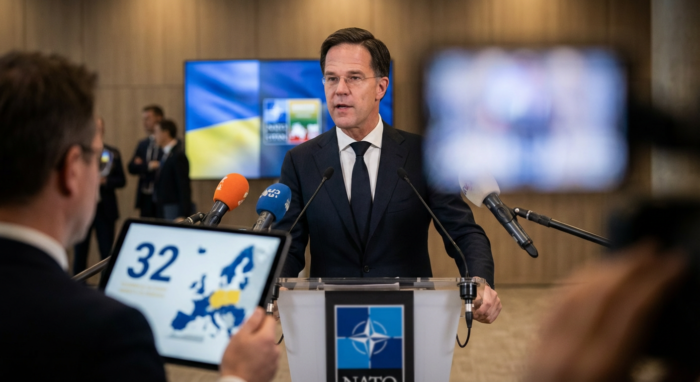
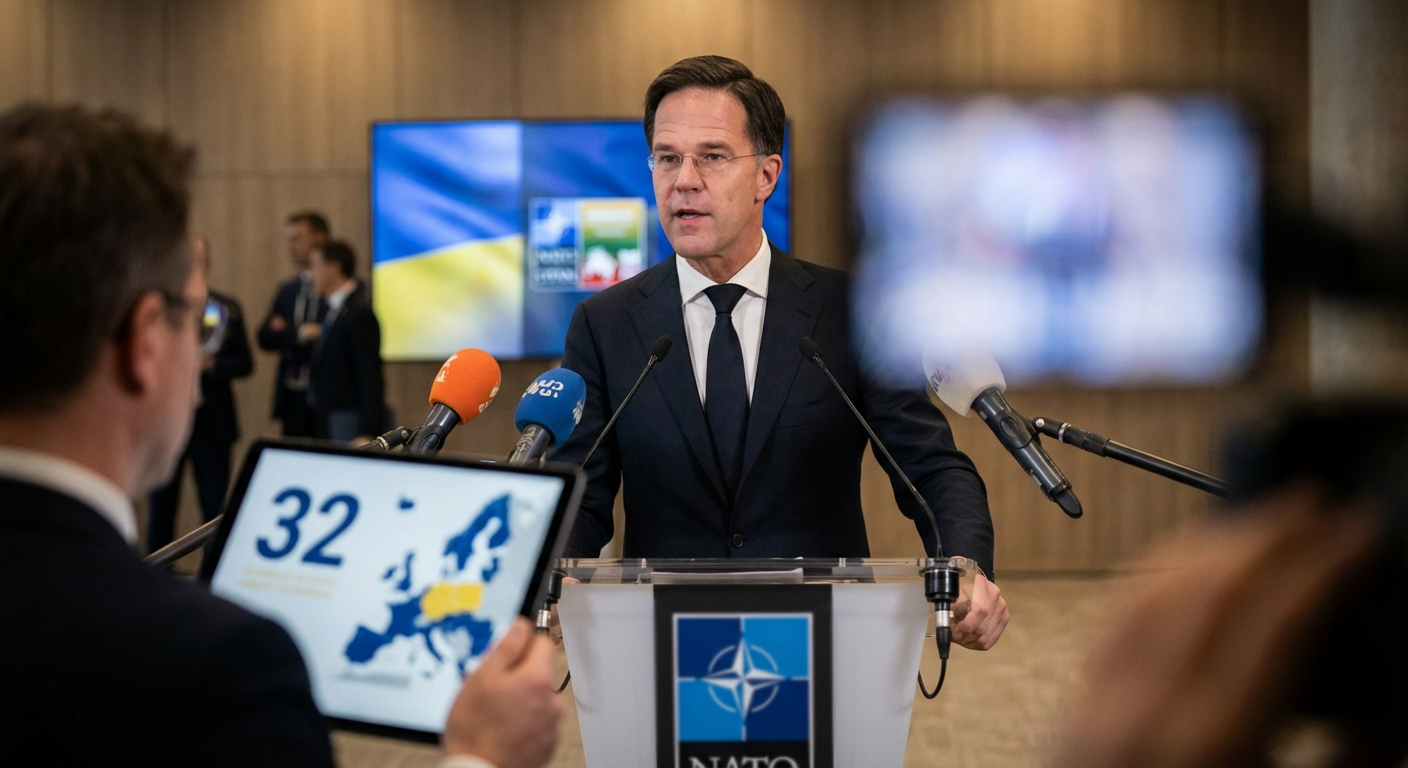
This brings us to the real constraint that makes the entire negotiation asymmetrical. When Zelensky demanded Article 5-equivalent security guarantees, he was asking for something that would require NATO consensus. Mark Rutte, the NATO Secretary General, was clear about this in January 2026. Any security arrangement for Ukraine outside formal membership would need unanimous approval from all 32 member states.
Think about what unanimous agreement actually means in practice. It means Hungary’s Viktor Orban has veto power. It means any single NATO member with strategic reasons to obstruct can do so. The protective commitment Zelensky was asking for required the agreement of every signatory. That’s not actually a security guarantee. That’s an aspiration.
The geopolitical stakes here become clear when you follow the incentives. The Trump administration wanted a negotiated settlement that would resolve American military commitments. The Ukrainian government wanted ironclad security guarantees that would prevent future Russian aggression. NATO wanted to expand without creating new security commitments that would divide its membership. Each of these goals pulled in different directions.
What made the situation tractable for some negotiators was precisely what made it unacceptable to Ukraine. The territorial concession framework solved the NATO unanimity problem. If Ukraine accepted reduced territory, the pressure for ironclad security commitments actually decreased, because there would be less territory to defend. Cold logic, but the kind that drives negotiations at this level.
What This Teaches Us About Power and Compromise
The real lesson here isn’t about who was right or wrong in the negotiating room. It’s about understanding how geopolitical leverage actually works when you’re smaller than your negotiating partners and when the great powers have declining commitment levels. Ukraine’s public and its government understood something fundamental: territorial concessions look like compromise only if they’re accompanied by guarantees that the compromising stops. Without those guarantees, they look like capitulation paid for with pieces of your country.
Follow the money and the military commitments and the picture gets stark quickly. Western aid was declining. The Trump administration was signaling it wanted an exit. The negotiators wanted a framework that would be politically salable. Each of these pressures pointed toward accepting territorial loss as the price of peace. The Ukrainian electorate and government said no. They understood that accepting permanent losses in exchange for promises is a losing trade when the partner making those promises is simultaneously scaling back its own commitments.
This is the kind of analysis that matters if you want to understand how international politics actually works versus how it’s described in press releases. The stakes aren’t abstract. They’re about whether a country gets to maintain its territorial integrity, whether its security is guaranteed, and whether the negotiators across the table have genuine incentives to honor their commitments.
What questions does this raise for you about how security commitments should work? What would constitute a genuine guarantee versus diplomatic theater? The details matter, and they’re worth thinking through carefully.