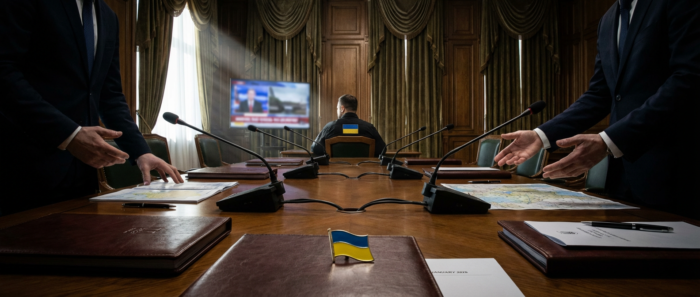
Ukraine at the Negotiating Table: Decoding the Structural Dynamics of the 2026 Ceasefire Proposals
The Framework and What It Actually Proposes
In February 2026, U.S. Secretary of State Marco Rubio introduced a ceasefire proposal in Riyadh that would freeze the conflict along existing lines of military control. The practical effect of this framework would mean Ukraine formally ceding approximately 20 percent of its territory to Russian-administered zones. This wasn’t presented as a permanent territorial loss, at least not in the official language. Rather, it was framed as a pragmatic acknowledgment of military realities on the ground, a way to stop the fighting and create space for diplomatic resolution of the remaining disputes. The appeal of such language is obvious: it promises an end to active combat, immediate relief from human suffering, and a pathway toward negotiations rather than continued attrition.
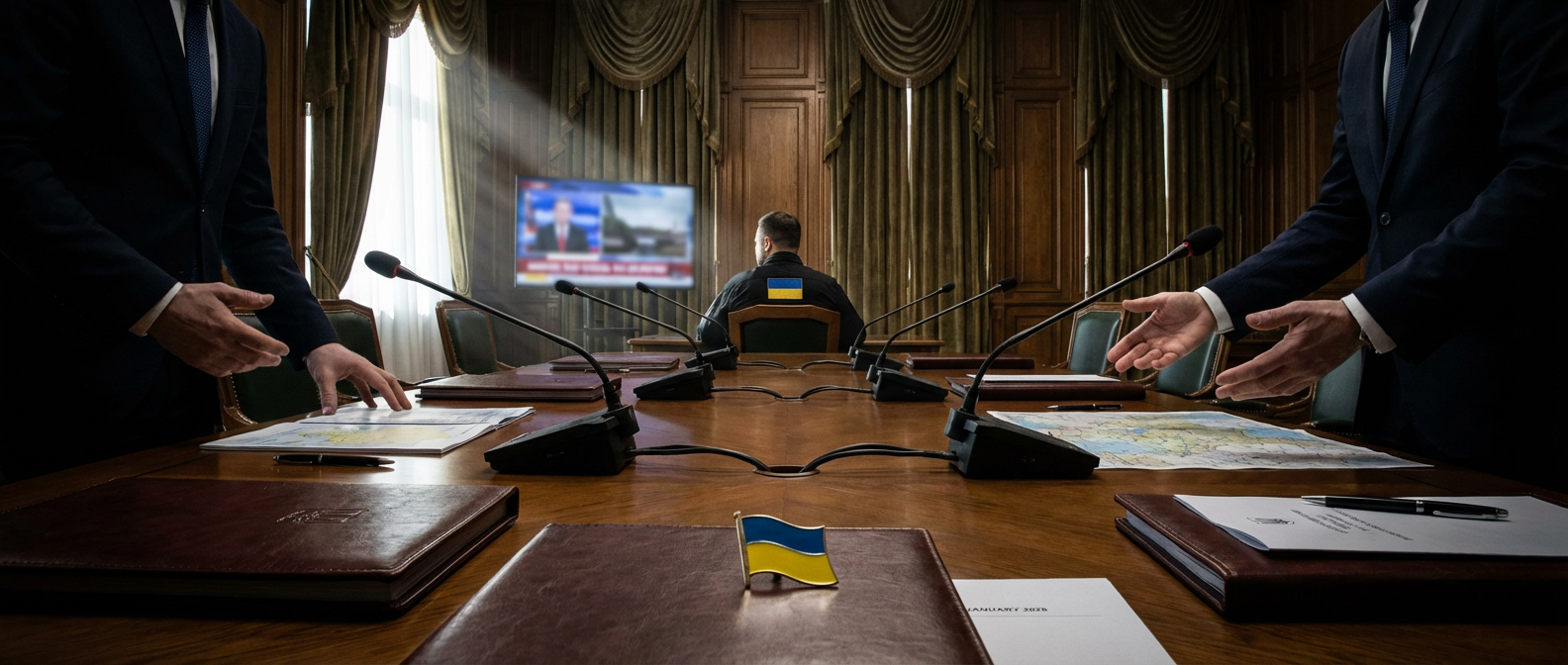
What makes this proposal structurally significant is how it reverses the historical presumption in international conflict resolution. Typically, ceasefires freeze situations with the intention of preserving the status quo ante, or at minimum preventing further territorial shifts. This proposal instead asks one party to accept territorial loss as the price of cessation. That assumption is worth examining carefully: it suggests that military stalemate should be resolved through territorial concessions by the state that was invaded. This is not a neutral observation about how negotiations typically work. It reflects a particular judgment about the balance of forces and the costs of continued conflict to various stakeholders.
The Ukrainian Position and the Security Guarantee Problem
Ukrainian President Volodymyr Zelensky’s response was formal and unambiguous. He rejected any territorial concessions unless they came paired with security guarantees equivalent in strength to NATO Article 5 commitments. Article 5 establishes that an armed attack on one member is an armed attack on all. Zelensky’s insistence on Article 5-equivalent protections reflects a structural reality about Ukraine’s vulnerability. If Ukraine surrenders territory without receiving ironclad security protections, what prevents Russia from launching another invasion once the ceasefire becomes politically convenient to break? This is not paranoia about Russian intentions. It is rational calculation based on recent history and the existing pattern of Russian behavior toward neighboring states.
Here is the central structural tension. Ukraine wants security guarantees before making territorial concessions. The Rubio framework essentially asked Ukraine to make territorial concessions in hopes that negotiations might eventually produce security guarantees. These are not compatible positions. They represent fundamentally different theories about which concessions should come first and what leverage each side retains as talks proceed. Zelensky’s position treats security guarantees as a prerequisite rather than a consequence. That kind of disagreement cannot be resolved through rhetorical repositioning or face-saving language.
NATO Expansion, Unanimity Requirements, and Structural Constraint
NATO Secretary General Mark Rutte offered a sobering clarification in January 2026. Any security guarantee for Ukraine that falls short of formal NATO membership would require unanimous agreement among all 32 member states. This is not a procedural technicality. This is a structural fact about how NATO operates and how alliance enlargement gets decided. Unanimity requirements are built into the treaty framework precisely because member states wanted to ensure no single nation could unilaterally commit the alliance to new obligations.
In practical terms, this means achieving a creative middle path between full NATO membership and no security guarantee would require Poland, the Czech Republic, the Balkans, the Nordic states, Western Europe, and the United States to all agree on identical terms for Ukrainian protection. History suggests this is extraordinarily difficult. Different NATO members have different strategic interests, different domestic political constraints, and different threat perceptions. Hungary, for instance, has already demonstrated willingness to block NATO decisions on Ukraine-related matters. Even if most member states wanted to provide security guarantees to Ukraine, a single holdout could prevent it. This is not a failure of diplomatic skill. It is a structural property of the alliance that cannot be negotiated away.
The Erosion of Military Support as a Structural Reality
Alongside these diplomatic conversations, something else has been happening that affects the entire negotiating landscape. According to the Kiel Institute Ukraine Support Tracker, combined Western military aid commitments declined by 43 percent between the first quarter of 2025 and the fourth quarter of 2025. This is not a measurement of spending or equipment delivery. This is a measurement of new commitments, the pledge of future support. When commitments decline this sharply, it signals something about the political will and budget priorities of supporting nations.
This erosion matters structurally because military support affects Ukraine’s negotiating position. If Western nations are signaling through their reduced commitments that they cannot sustain current levels of military assistance indefinitely, that signal reaches the negotiating table even if nobody says it out loud. Ukraine’s willingness to hold out for better terms depends partly on confidence that military support will continue. When that confidence erodes, so does the leverage of the party receiving the support. This dynamic does not require anyone to explicitly say, “We are reducing aid to pressure Ukraine to make concessions.” The structural incentives work on their own.
What Ukrainian Public Opinion Actually Reveals
Here is a fact that deserves more attention than it typically receives. According to the Kyiv International Institute of Sociology public opinion data, a January 2026 poll found that 68 percent of Ukrainians opposed any territorial concessions to Russia as part of a peace deal. This is not a narrow majority. This is a substantial consensus. When nearly 70 percent of a population that has been living with active warfare for years still rejects territorial compromise, that tells you something about what Ukrainians see as the alternative futures available to them.
The structural significance of this number is that it represents a constraint on what any Ukrainian government can actually accept and maintain legitimacy. A leader who negotiates away 20 percent of the nation’s territory without security guarantees would face enormous domestic political pressure. You can call this public opinion, or you can recognize it as a hard limit on the negotiating space. Not every position is available to a democratic government, particularly when that position contradicts the explicit preferences of the vast majority of citizens who will live with the consequences. This is not an argument for or against territorial concessions. It is simply an observation about what kinds of agreements are politically sustainable within Ukraine itself.
The Broader Pattern and What We Might Learn
The ceasefire proposals of early 2026 illustrate how international conflict resolution runs into structural obstacles that diplomatic brilliance or political will cannot always overcome. These obstacles exist at multiple levels simultaneously. There is the military structure of the conflict itself and the balance of forces on the ground. There is the structural reality of alliance decision-making and unanimity requirements. There are domestic political constraints and public opinion. There is the structure of military aid and alliance commitment that signals willingness to continue supporting one side or another.
When you look at these structures honestly, the puzzle is not why Ukraine and Western mediators have not yet reached an agreement. The puzzle is what would need to change in any of these structural features to make agreement possible. Would Ukraine need security guarantees written in stone? Would NATO need to reform its decision-making procedures? Would Western military commitments need to stabilize or increase? Would Russian demands need to moderate? Would Ukrainian public opinion need to shift? These are the actual questions beneath the surface of ceasefire negotiations. Understanding them requires looking past the personalities involved and the rhetoric deployed toward the deeper patterns that constrain what is possible.
This is the kind of analysis you can apply to any major political negotiation, whether it involves international conflict or local zoning disputes. Ask yourself what structural features are actually at play. What constraints exist that are not primarily about whether people are negotiating in good faith? Where do the incentives and institutions point? What would actually need to change? These questions require more intellectual work than simply tracking who said what to whom. But they offer clarity about what kinds of change are realistic and what kinds remain wishful thinking. The next time you encounter a political dispute that seems stuck or baffling, I’d encourage you to ask what structures are really at work.