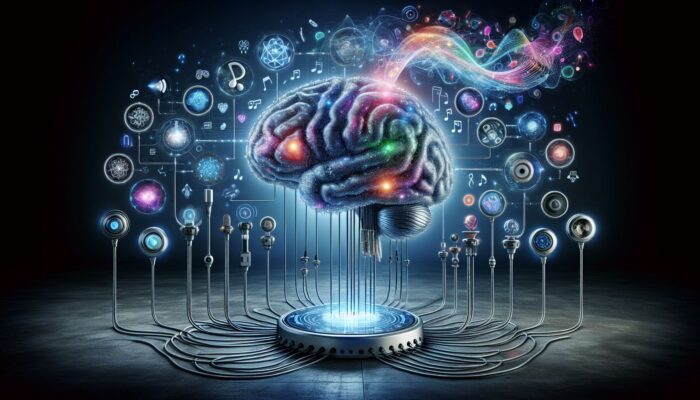
The Enigma of Synthetic Senses: Redefining Our Human Experience
When you think about technology that reshapes how we experience the world, AI, space travel, or drone-delivered cappuccinos probably come to mind. But today I want to talk about something that’s been quietly gaining momentum: synthetic senses. This is where biology meets technology, right at the intersection where humans get to play both mad scientist and willing test subject. It’s wilder than anything from Cloud Atlas.
What Are Synthetic Senses Anyway?
Let me break down what these “synthetic senses” actually are. Basically, we’re talking about using technology to enhance or completely reimagine human sensory experiences. Think bionic vision, superhuman hearing, or sensing things we’ve never been able to detect before. Remember Geordi’s visor from Star Trek? We’re heading toward that kind of reality, except it’s not science fiction anymore.
The crazy part? This stuff isn’t stuck in Hollywood fantasy land. Real labs around the world are working on human enhancement tech that would make medieval explorers’ heads spin. We’re talking about genuinely expanding what it means to be human, one sense at a time.
What’s Happening Right Now
You can’t talk about synthetic senses without mentioning brain-computer interfaces. Thanks to companies like Neuralink, we’re getting closer to directly connecting our brains to computers. As these systems get better, the line between thinking about checking your email and actually doing it gets pretty blurry.
Then there’s electromagnetic vision, which sounds exactly as cool as it is. Researchers are working on ways to let people see beyond the visible spectrum. Want to see ultraviolet light like some animals do? We’re getting there.
And that’s just the beginning. Scientists are experimenting with enhanced hearing that could let you pick up frequencies you never knew existed. The possibilities are honestly pretty mind-bending.
How This Could Change Everything
The implications here are huge. Think about how this technology could revolutionize communication, work, and pretty much every aspect of daily life. When people can see magnetic fields or hear electrical signals, we’re not just talking about cool party tricks. We’re talking about fundamentally different ways of experiencing reality.
Imagine surgeons who can see inside the human body without X-rays, or engineers who can literally feel structural stress in buildings. The applications span every field you can think of, from medicine to construction to art. We’re looking at a future where human limitations become a lot more flexible.
The Tricky Parts
Of course, this raises some serious questions. Who gets access to these enhancements? How do we handle the gap between enhanced and non-enhanced humans? There are privacy concerns too. If your senses can interface directly with digital systems, what happens to personal data?
Then there are the safety issues. We’re talking about technologies that directly interact with the human nervous system. The stakes for getting this wrong are pretty high. And let’s be honest, the idea of hacking someone’s senses sounds like a cyberpunk nightmare.
Where We Go From Here
Right now, we’re still in the early stages. Most of the current applications focus on helping people with disabilities, which is fantastic. But as the technology gets cheaper and more reliable, we’ll have to decide as a society how far we want to take human enhancement.
The next few decades are going to be interesting. We’re standing at the beginning of what could be the biggest change in human experience since we developed language. Whether that’s exciting or terrifying probably depends on how carefully we navigate the challenges ahead.