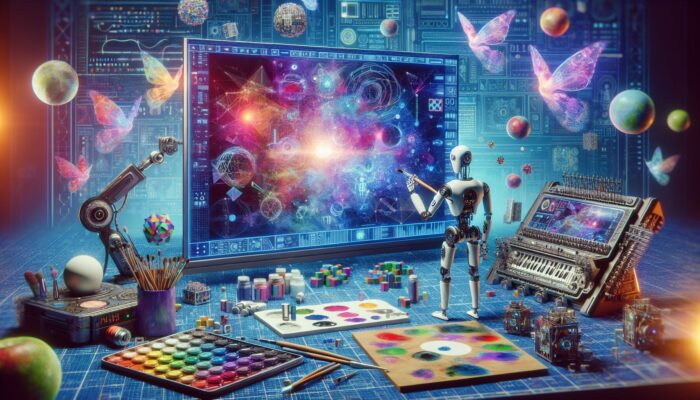
Is the Future Sound Synthesized? AI in the Creative Arts
There’s a good chance you’ve already been exposed to it without realizing it. Whether it’s that catchy new earworm, an eerie background score in a sci-fi movie, or even a surprisingly convincing piece of visual artwork, AI isn’t just peeking through the curtains of the creative world. It’s taken over the whole damn stage. So how did we get here, and why does this excite me as much as it probably should terrify me? Grab your popcorn, or in my case, my third cup of coffee, because we’re diving into how artificial intelligence is reshaping creative arts.
The Artistic Algorithms at the Helm
Meet the new players: OpenAI’s DALL-E for visual art, MuseNet for music, and GPT-3 for writing. Each one is programmed with enough artistic knowledge to make Beethoven jealous (and probably a little confused).
You know that Van Gogh-style portrait you saw online last week? Or that Pink Floyd-inspired track that popped up on your playlist? Plot twist: there’s a decent chance an AI created it. Every brushstroke, every chord progression, crafted in seconds by neural networks that have studied more art than most humans see in a lifetime.
GPT-3 and the (Re)writing of History
A writer and AI walk into a bar. No, this isn’t a setup for a bad joke. It’s pretty much my daily reality now. GPT-3 can produce prose so convincing it would make García Márquez do a double-take.
I decided to test GPT-3 a few months back with a ridiculous haiku challenge (because apparently I have nothing better to do). The results were unsettlingly human. Here’s an AI that can process more creative content in an hour than I could read in a year, and it spits out poetry that actually makes sense.
When Spotify Meets Silicon Valley
Music streaming has become AI’s playground. These algorithms don’t just recommend songs anymore, they’re writing them. I’ve listened to AI-generated tracks that had me checking the credits twice. The melodies feel familiar yet fresh, like hearing a cover of a song you swear you know but can’t quite place.
What gets me is how these systems capture emotional nuance. They’re not just throwing notes together randomly. They understand tension and release, build-ups and drops. Sometimes I wonder if my Spotify algorithm knows my music taste better than I do.
The Uncomfortable Questions
Here’s where things get messy. If an AI can paint like Picasso or compose like Mozart, what does that mean for human artists? I’m torn between fascination and genuine concern.
On one hand, these tools are incredible creative partners. They can generate ideas faster than any brainstorming session I’ve ever been in. But there’s something unsettling about machines creating art that moves people emotionally. Art has always been our most human expression. When algorithms start doing it better than us, where does that leave human creativity?
The ethics get murky fast. Who owns an AI-generated piece? The programmer? The user? The machine itself? And what happens to artists whose livelihoods depend on the very skills AI is now mastering?
I don’t have clean answers to these questions. Nobody does yet. But I do know this: AI in creative arts isn’t going away. The technology is improving too fast, and the results are too impressive to ignore.